

Improved urban mobility through PPPs: how the largest bus transportation system in the world is managed
In August 2024, the participants in the Brazil Study Tour, organized by the UMDF, went to visit three Brazilian cities facing increasing urbanization, social inequalities and environmental risks, accentuated by climate change. In this context, responding to the population's demand for improved sustainable mobility is key to improve spatial inclusiveness, create economic opportunities and combat climate change. The Study Tour participants were able to see how those cities have implemented successful Public Private Partnerships to address such challenges.
Learn more about the Brazil Study Tour 2024 organized as part of the African Cities Program (ACP) here
Curitiba, Fortaleza, and Sao Paulo have invested heavily and, above all, invented new ways of designing, managing and financing their transport networks. The solutions they have implemented are both unified and suggest new ways for the public and private sectors to work together, to reduce traffic congestion and promote sustainable transportation. More specifically, the three case studies made a strong impression among the 21 high-level municipal staff of African cities that took part in the UMDF Brazil Study Tour.
SPTrans: Building a win-win partnership with private actors to operate the largest bus transportation system in the world
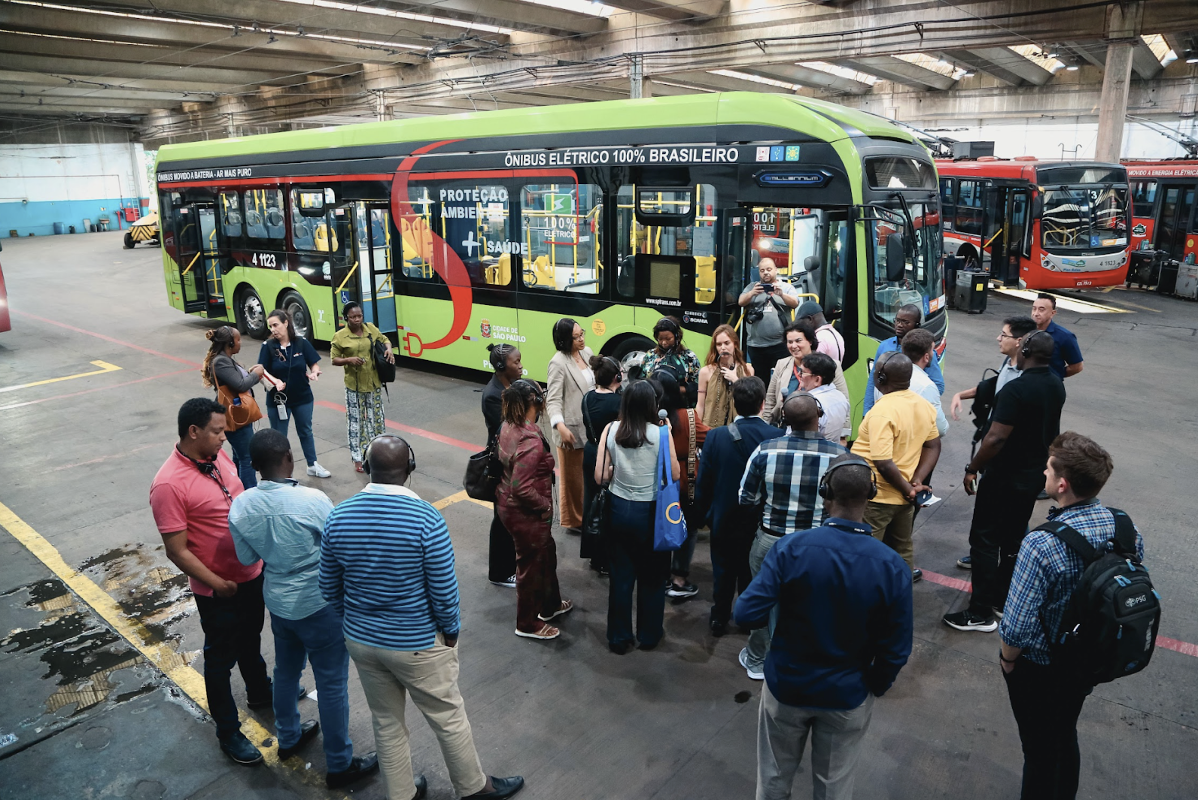
SPTrans in São Paulo, is a public company responsible for managing one of the largest public bus transportation systems in the world with 7.1 million passengers on working days. Twenty years ago, the city switched from an informal private system to a unified public system and the introduction of the “bilhete unico,” single ticket, to access the bus and the metro was one of the measures that impacted people’s life by making their commutes easier, faster, and cheaper. Considering the number of actors involved (privates actors, the municipality, the state and the federal authorities), the key to success was the ability of SPTrans to build a multi-level dialogue to ensure that skills and systems created interoperability.
When the transition to a unified public system was made, private operators were integrated: the public did not replace the private as a concrete operator, but positioned itself as a supervisor, dictating the rules and unifying the branding. SP Trans monitors traffic, establishes rules and handles subscriptions, but operational management and vehicles purchasing is entrusted to private concessionaires.
It is the concessionaires themselves who buy the buses and make them available to SP Trans, with highly restrictive targets in terms of reducing greenhouse gas and particulate emissions. To support the private operators, a bonus is paid by the public sector to compensate for the difference in value. The majority of buses are purchased as a group, in China, which allows for fleet standardization and economies of scale. In addition, as electricity is cheap in Sao Paulo, buses can run at reasonable prices: so, while major initial investments are required, the costs of recharging and day-to-day maintenance are much lower.
A wide range of buses has been developed, allowing vehicle types to be adapted to various uses: large electric articulated buses operate on BRT corridors, an extensive fleet of mid-sized buses connects different parts of the territory, while smaller vehicles navigate the narrow streets of informal neighborhoods, ensuring residents can complete the last mile to their homes.
URBS: Aligning the interest of the operators and the public to build an efficient and inclusive mobility system
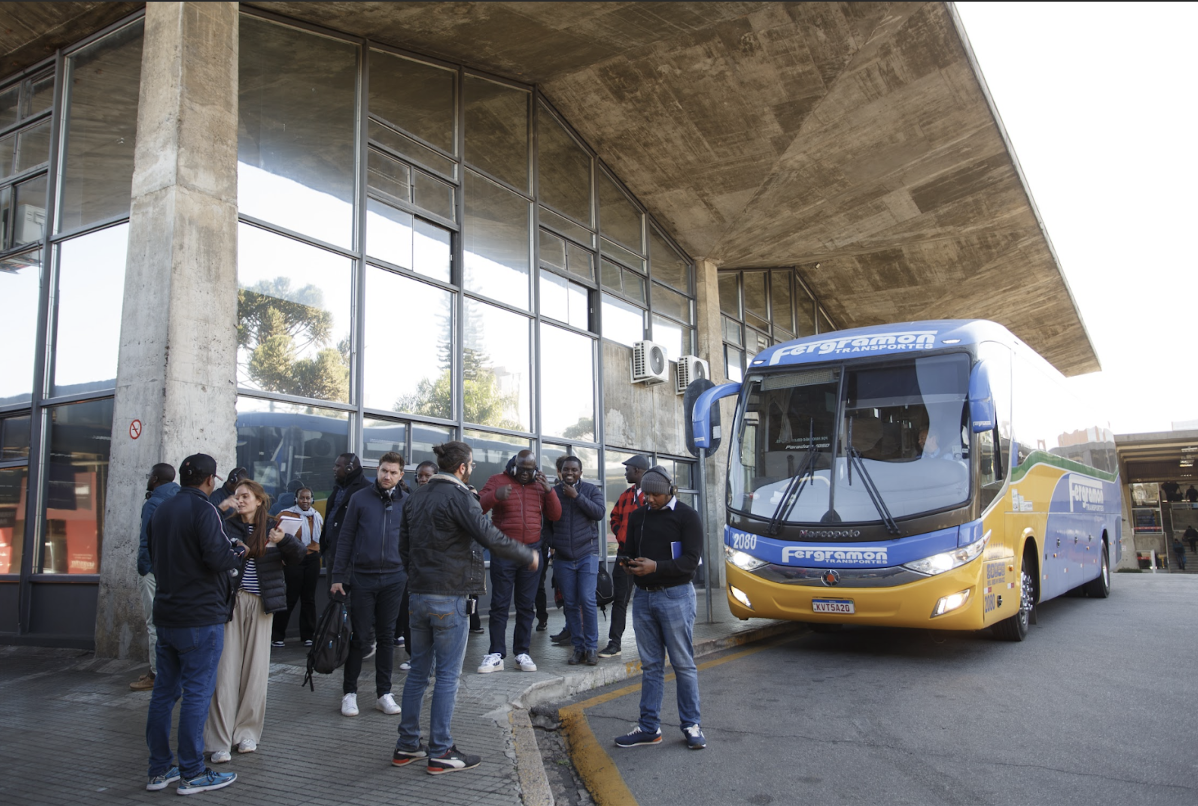
In Curitiba, the URBS was set up in 1963 as a planning agency to oversee the transport system. Today, its scope includes cabs, motorcycle deliveries, and school transport. The company also owns urban facilities such as the municipal market, bus station, kiosks, public toilets, citizenship hubs, and intelligent parking lots. This unified management approach enables these facilities to be designed in an integrated manner and ensures work focuses on their complementarity.
Curitiba's BRT system is renowned for its distinctive stations, whose tubular and transparent design is immediately recognizable and has become a visual signature. Equipped with boarding gates for ticket validation, the stations are also elevated relative to the road, ensuring passengers board and alight at the exact height of the bus. These features facilitate quick and accessible boarding and disembarking. Less downtime means faster trips, a key factor in encouraging residents to use public transport. The efficiency of the system has served as an inspiration for other cities, such as Bogotá with its "TransMilenio," demonstrating that well-designed facilities can transform urban mobility and significantly enhance residents' quality of life.
The URBS business model is similar to that of SP Trans: the company manages not only the payment system and branding, but also the itinerary, which is unique to the city. The operator is responsible for purchasing the rolling stock, the buses, and for driver contracts and training. Prior to 2009, a licensing model prevailed, meaning that private operators transported and managed the payment system themselves.
The operator receives a payment from the URBS which is smoothed out over the life of the vehicle: it is a compensation for the depreciation of the vehicle which is spread over ten years or so, and which can reach up to 95% of the value given for the vehicle. But this amount never reaches 100%, and it is always the operator who retains ownership of the vehicle. The electric charging stations are installed in terminals and depots, and are managed by a consortium of three operators who are responsible for their maintenance.
The challenge is, therefore, to reconcile public interests with the operator's interests: this is why operators are remunerated per passenger carried, not per kilometer traveled. Prior to the Covid pandemic, operators were remunerated on the basis of an annual estimate, then corrected according to actual passenger numbers. However, during the pandemic, passenger flows fluctuated significantly, leading to major discrepancies between forecasts and reality, which undermined the remuneration of operators. The correction is now made on a monthly basis, to enable more accurate monitoring and prevent crises that could affect operators' profitability.
In Fortaleza, saving lives is now the main objective of the traffic management and operations are delegated to optimize both the cost and the efficiency
In Fortaleza, the delegation visited a specialized center dealing with traffic supervision. This screen-filled room is called the "Mobility Central for the Preservation of Life in Traffic", and clearly shows that the municipality's priority is safety. Prior to 2014, the focus was on traffic fluidity, but this objective had unintended perverse effects and generated many safety problems.
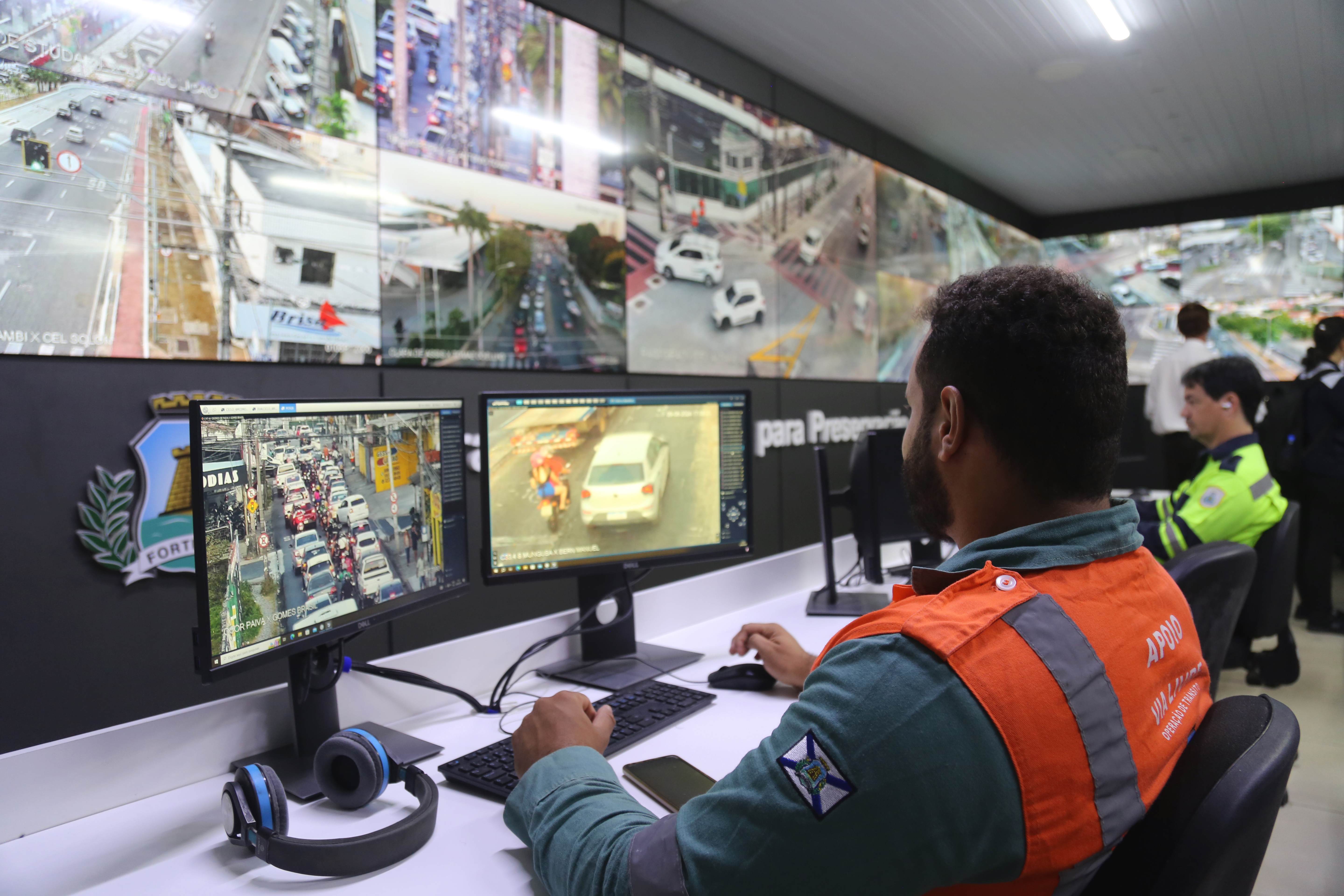
The integrated system now makes it possible to track problems in the city, such as accidents, engine breakdowns, and red light failures. In this way, they can also trace the origin of breakdowns (power supply failure, degradation, etc.) thanks to 400 cameras covering both main roads and intersections in more distant neighborhoods. These cameras are mounted around crossroads where they can intervene directly on the traffic lights, notably by changing the flow of the lights and their frequency. Between 2014 and 2023, there was a reduction of 58.4% in road accident fatalities.
After adopting a proprietary system, maintenance issues and rapid technological advancements prompted the city to then abandon it in favor of a service contract with a private company, whose management proved to be more flexible. In this setup, the authorities pay "for the image received from the ground:" if a camera is not operational, the municipality does not pay for the service and even receives compensation from the private operator. This incentivizes the operator to ensure the flawless performance of the equipment network. The cost is high (around 600 USD per camera per month), but the company covers the entire chain, from camera supply to data processing, using intelligent cameras.
The UMDF aims to support African municipalities in the formulation of climate-friendly public-private partnerships. These three Brazilian case-studies are good illustrations of ways to scale up private sector participation in the financing and managing transport system, affording insightful examples for the delegation’s members.
Learn more about the key lessons that African cities can learn from Latin American experiences by reading this report: launched in October 2023, it details recommendations and policy insights to improve transportation systems.
You can also learn more on how to promote urban sustainability in this report, entitled Sustainable cities through transport: Optimising urban investments in Africa published in 2024 by the AfDB in collaboration with the Institute for Transportation and Development Policy (ITDP).
A focus on the bus sector is available in this report: Quick Guide to Bus Sector Modernisation, published in 2020 by the AfDB and the ITDP.