In Morocco, a training program on waste management and recovery
Used oils, tires, sewage sludge, organic materials... many household and industrial wastes can be recovered and turned into energy or compost. In Morocco, the Urban and Municipal Development Fund (UMDF) financed a training workshop for managers and engineers from the Moroccan Agency for Economic Efficiency (AMEE), whose mission includes the development of the circular economy.
From February 19 to 26, 2024, in Marrakech, twelve managers and engineers from the Moroccan Agency for Economic Efficiency (AMEE) and the Department of Energy Transition (MTEDD) took part in a week of training around waste recovery. The activity, financed to the tune of $25,000 by the Urban and Municipal Development Fund of the African Development Bank (AfDB), is part of AMEE's strategy for the development of the circular economy.
In-depth training to meet the challenges of life cycle waste management
A source of pollution and greenhouse gas emissions, industrial and domestic waste is also a major source of energy... provided it is correctly collected, sorted and efficiently recovered. To set up appropriate recycling and energy recovery systems, it is firstly necessary to understand the life cycles of the different types of waste, but also to understand the overall context of the circular economy: what are the existing strategies, the technical possibilities and the regulatory framework?
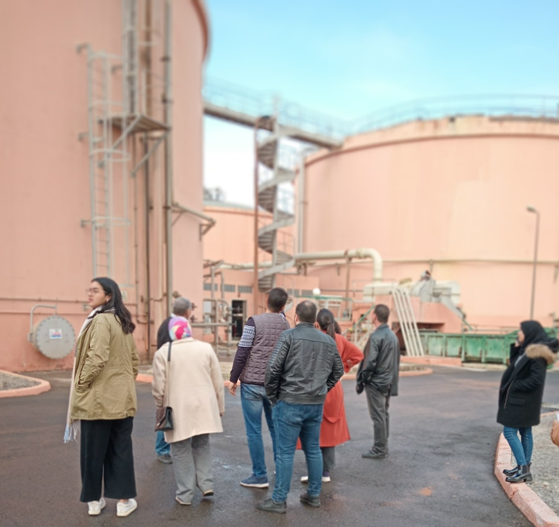
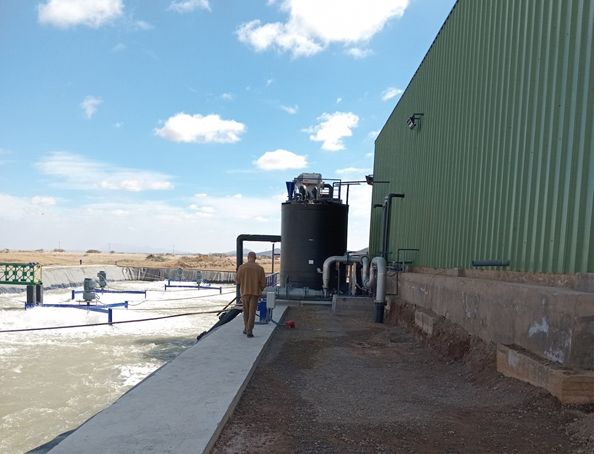
Spread over six days, alternating theoretical content and practical workshops, the training provided by EDIC consulting enabled managers from the AMEE and MTEDD to consolidate their knowledge in the field, while coming face-to-face with the realities of the field, with visits to the Radeema digester and sludge drying unit, the glass recycling unit at the Beldi glassworks, and a rehabilitated landfill in Marrakech.
Managers and engineers to become trainers in their own right
During the course, participants were able to carry out a techno-economic feasibility study to understand the challenges and issues inherent in waste recovery. Group dynamics were encouraged by quizzes and group exercises to learn how to solve the problems faced by the different sub-sectors.
On the final day, held in Rabat, participants took part in role-playing exercises to learn how to pass on the skills acquired during the workshop to others. At the end of the week, the managers and engineers who had benefited from the training were intended to be in a position to train the members of their respective teams in turn, thereby helping to disseminate knowledge.
Capacity building
This action is part of the overall action plan put in place by the Moroccan authorities to promote the transition to a green economy and, in particular, the National Strategy for Waste Reduction and Recovery (SNRVD), which the country adopted in 2019. This strategy is one of the components of Morocco's National Sustainable Development Strategy, whose objectives of improving living conditions and combating global warming are also strategic pillars for the UMDF.
Through its Small Grant Initiative, the UMDF provides agile support for a wide range of projects, with grants of up to $30,000. This initiative has already contributed to several capacity-building programmes, notably in Togo and Congo.